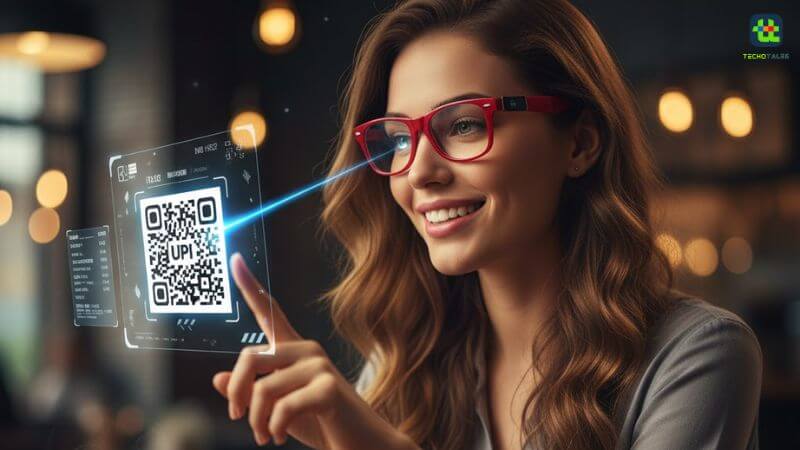
As digital payments become seamless and invisible, wearables are evolving from accessories to active financial tools. While smartwatches have dominated this space, Lenskart - India's leading eyewear brand - is taking the next leap with B Camera Smartglasses, unveiled at the Global Fintech Festival 2025.
These glasses integrate with NPCI's UPI Circle to enable secure, voice-activated payments directly through the eyewear - no smartphone, no OTP, no PIN. This convergence of biometrics, AI, and embedded finance marks a pivotal shift in how humans will transact.
How It Works: Core Technical Architecture
Camera + QR Scanner
Built-in point-of-view camera scans UPI merchant QR codes
Voice Recognition
Captures commands and authenticates users through voice biometrics
Secure Element
Stores device-bound payment tokens and cryptographic keys
Setup & Credential Binding
During activation, the user links their UPI account through Lenskart's companion app. A voiceprint is enrolled and stored securely. The glasses receive a unique payment token from the issuer bank through NPCI's UPI Circle. The token and device ID are cryptographically tied to the user.
Payment Flow
Trigger
User scans a QR code and says "Pay ₹250 to Café Aroma"
Processing
The glasses identify the merchant, amount, and voice command
Authentication
Voice biometrics confirm user identity. Device signature verifies possession
Transaction
A tokenised request is sent to the UPI network. Bank authorizes; glasses confirm success via audio or visual cue
Security & Fraud Control
Device-bound tokenisation prevents credential cloning. Voice + liveness detection ensures the user is physically present. Risk-based limits apply higher authentication to unusual transactions. Tokens can be revoked remotely if glasses are lost.
Did You Know?
The Lenskart B Camera Smartglasses use advanced liveness detection technology that can distinguish between a live human voice and recorded audio, making voice spoofing nearly impossible.
Roadmap: Where This Technology Is Headed
(2026)
Commercial Rollout & Expansion
- Commercial rollout in India, starting with low-value voice payments
- Wider merchant support via existing UPI QR infrastructure
- Partnerships with major banks for token provisioning
- Battery and comfort optimisations for everyday usability
(2027-2028)
Advanced Features & Integration
- NFC and tap-to-pay support in global variants
- Multi-factor authentication: Combining voice, gaze, and gesture
- AR integration: Displaying payment status, receipts, and offers in the HUD
- Edge-AI processing: Enables faster, privacy-preserving transactions offline
- CBDC readiness: Early integration with India's digital rupee infrastructure
(2029+)
Ubiquitous & Predictive Payments
- Cross-border interoperability with Visa/Mastercard token systems
- Predictive payments: Glasses anticipate recurring purchases
- Biometric fusion: Voice + behaviour + context enable near-invisible payments
- Identity as a Service: Voice biometrics evolve into portable financial identities
Strategic Implications
Reimagining the Wallet
Eyewear becomes a payment terminal on your face, eliminating the need for physical wallets or smartphones during transactions.
FinTech × Fashion Fusion
Lenskart positions itself beyond optics, into tech lifestyle, creating a new category of functional fashion accessories.
Identity as a Service
Voice biometrics evolve into portable financial identities that can be used across multiple services and platforms.
Regulatory Catalyst
Pushes RBI and NPCI toward defining standards for voice-driven authentication and wearable payment systems.
Key Unknowns to Watch
While the technology is promising, several questions remain unanswered:
Voice Recognition
Accuracy of voice recognition in noisy, real-world settings
Transaction Limits
Limits on transaction size and fallback methods for higher-value payments
Privacy Concerns
Consumer privacy around biometric voice data collection and storage
Battery Efficiency
Battery efficiency with continuous connectivity and processing requirements
Conclusion
Lenskart's voice-enabled payment glasses illustrate where fintech, AI, and wearables intersect. By embedding payments into something people already wear, the company bridges convenience and trust in a way smartphones never fully achieved.
If executed well, this could be the most frictionless transaction experience yet - no phones, no OTPs, no gestures. Just look, say, and pay.
This isn't merely the future of eyewear; it's a glimpse of how the next decade of human-tech interaction will look literally.